The model, author and founder of AURY Collective talks about rejection, resilience and why a life should never be defined by an image.
By Peter Koloff
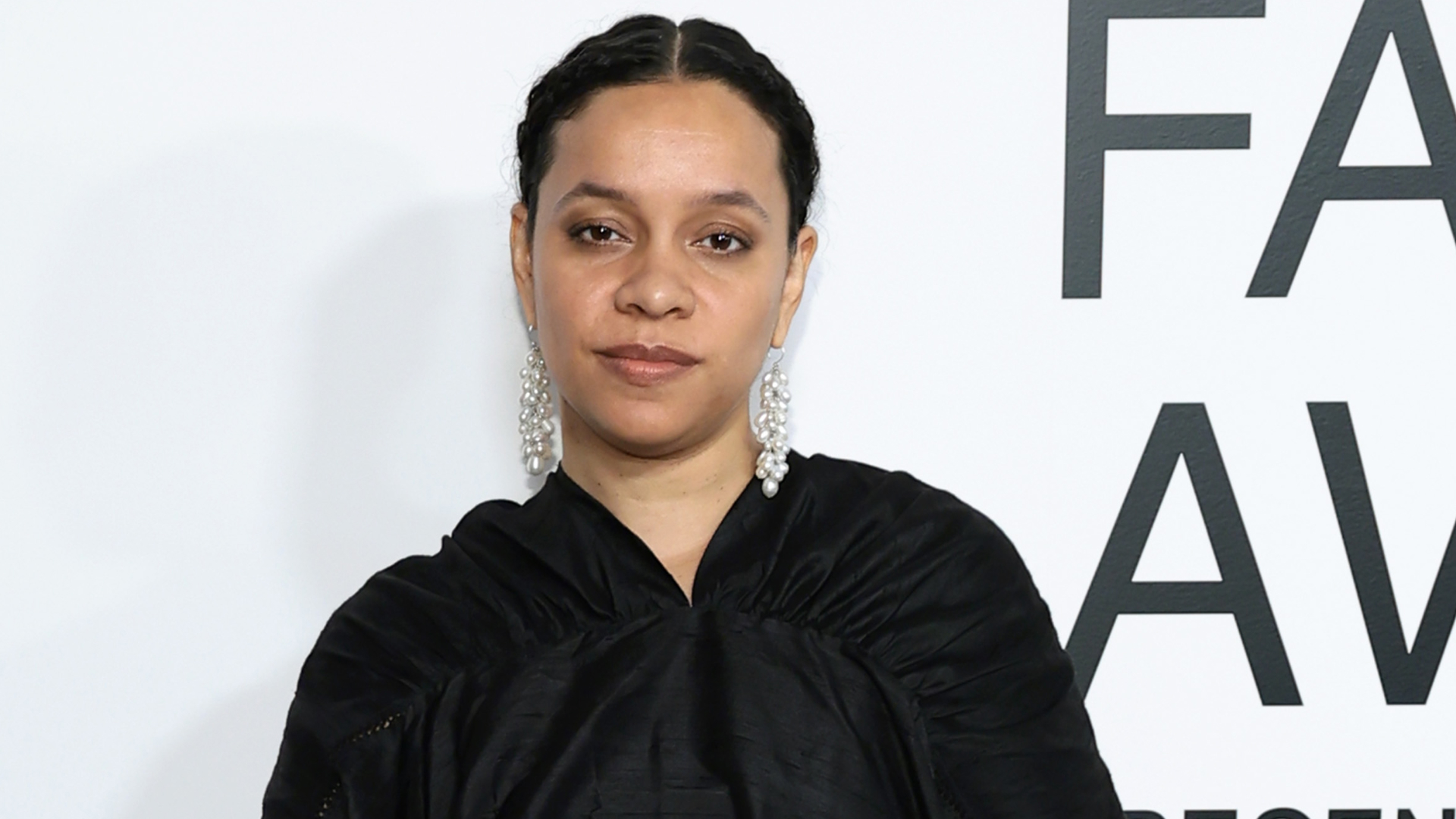
Anya Marcon has spent years working in an industry that makes appearance look like the whole story.
She does not see it that way.
“People assume modeling is about looks, but a look might get you in the room. Grit is what keeps you there,” Anya Marcon says.
It is a useful distinction, and one that explains much of the thinking behind Model Life, the anthology she curated around 22 women whose careers move through fashion, film, television, media and business.


Marcon knows the machinery of modeling from the inside. The castings, campaigns and photographs may be the visible part, but she describes a profession built just as much around rejection.
“You hear far more ‘no’s’ than ‘yeses,’” she says. “Longevity comes from professionalism, resilience, and learning not to take rejection personally.”
That last part may be the hardest.
Fashion can make decisions feel personal even when they are not. A face is right for one campaign and wrong for another. A client changes direction. Someone else fits the idea better.
“So much of the decision-making is subjective and completely outside your control,” Marcon says.
What remains within your control is what you do next.
The Life Behind the Image
That question runs through Model Life.
Marcon brought together women at different stages of their careers and lives, expecting their experiences to vary. They did.
What surprised her was how similar the underlying struggle could be.
“Their grit,” she says. “Every woman had to blaze her own path, and no two paths looked the same.”
Some careers followed fashion more closely. Others moved toward acting, entrepreneurship, media or entirely different forms of work.
The commonality was not the route.
It was the need to keep going without waiting for permission.
“You have to become your own advocate and believe in yourself, often long before anyone else does.”
That may be one of the less glamorous truths about careers built around public visibility. Being seen does not necessarily mean being understood, supported or even believed in.
Sometimes the person in the photograph has to become the first person willing to bet on herself.
More Than Modeling
Marcon is careful not to position Model Life as something only women in fashion will understand.
The runway is the starting point, not the destination.
“I hope she realizes that none of us should let a title, an image, or someone else’s opinion define our worth,” Marcon says when asked what she hopes a young woman who has never modeled takes from the book.
That moves the conversation away from fashion quickly.
Most people will never stand at a casting or walk a runway, but nearly everyone eventually confronts some version of rejection. A job that does not happen. A relationship that ends. A career that changes direction. A version of yourself that no longer fits.
“Model Life may begin with modeling, but it’s really about being human,” she says. “Resilience, reinvention, and learning to trust yourself.”
There is nothing particularly fashionable about that.
Which may be exactly why the idea works.
What Comes After No
Fashion tends to celebrate arrival.
The campaign. The cover. The booking. The moment someone decides you belong.
Marcon seems more interested in what happens when the answer is no.
“Rejection doesn’t determine your value,” she says. “What matters is continuing to build a life that feels authentically yours.”
It is a simple idea, but not an easy one.
An industry built around selection inevitably creates people who have to learn how not to let selection become identity.
Marcon’s answer is not to pretend rejection does not matter. It is to refuse to let it become the final authority.
That may also explain why Model Life ultimately reaches beyond modeling.
The women in its pages have careers, photographs and public identities, but Marcon is interested in the part that cannot be captured in a single frame.
The decisions made after the photograph.
The life built after the rejection.
And the person who remains when the title no longer explains enough.